
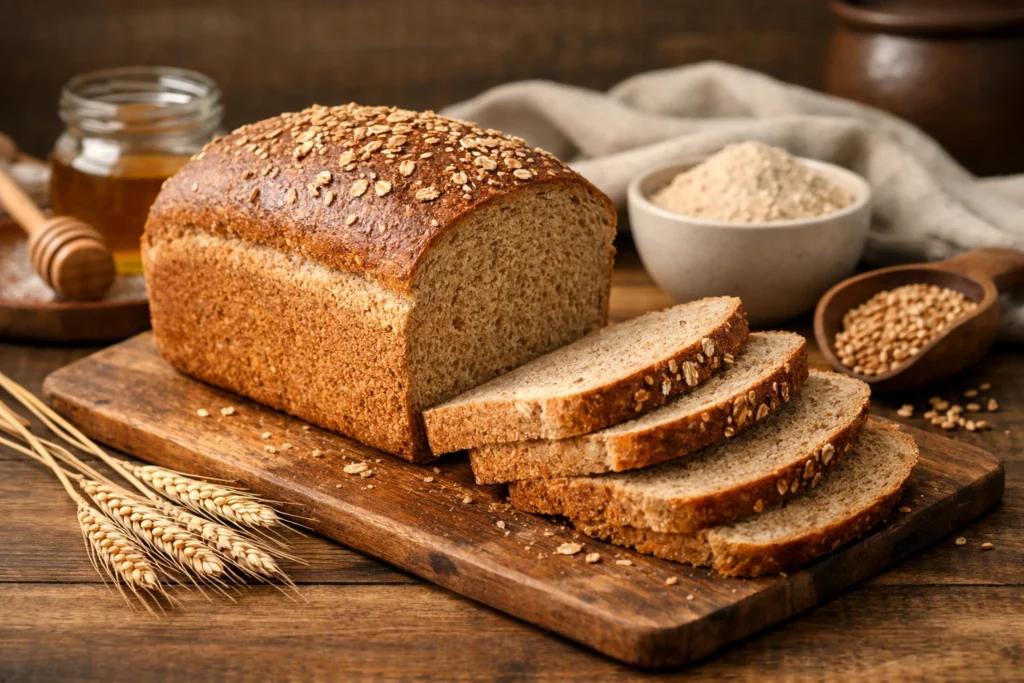
Whole wheat bread recipe is something I avoided for years, mostly because my early attempts were dense, dry, and honestly disappointing. I grew up watching white sandwich bread rise effortlessly, while whole wheat loaves felt stubborn and heavy in comparison. It took time, patience, and many small adjustments in my home kitchen before I finally understood how whole wheat dough behaves.
What changed everything for me was slowing down and accepting that whole wheat flour needs more care, not more effort. Once I stopped rushing the process, this bread became part of my regular baking routine.
Why I Make This Whole Wheat Bread Recipe at Home
I started baking this whole wheat bread recipe regularly when I wanted better control over ingredients and texture. Store-bought versions were either too sweet or too dry. Baking at home allowed me to understand hydration, fermentation, and how freshly milled flour reacts differently from refined flour.
This is not a bakery-style loaf. It’s practical, soft enough for toast, sturdy enough for sandwiches, and realistic for an Indian home kitchen.
Ingredients I Use for This Whole Wheat Bread Recipe
- 3 cups whole wheat flour (atta)
- 1 ¼ cups warm water
- 2 teaspoons instant yeast
- 2 tablespoons oil or melted butter
- 1 tablespoon honey or sugar
- 1 teaspoon salt
Step-by-Step Whole Wheat Bread Recipe (How I Do It)
Mixing the Dough
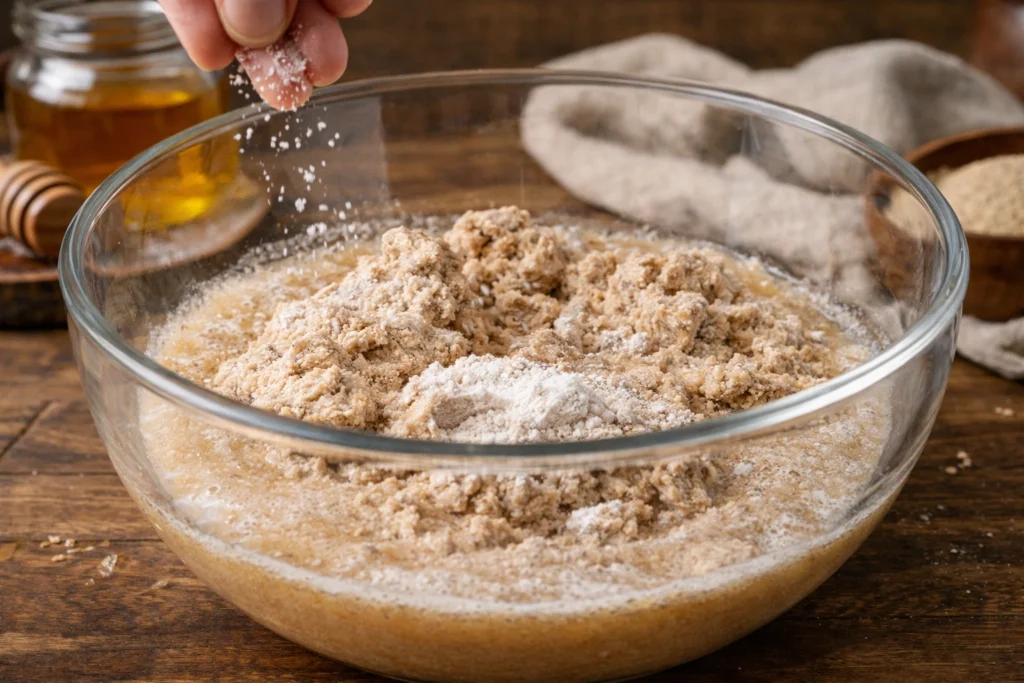
I start by mixing warm water, yeast, and honey in a bowl. After letting it sit for about five minutes, the surface becomes slightly foamy. That’s when I add the whole wheat flour and salt. The dough looks rough at first, which is normal.
Kneading and Hydration
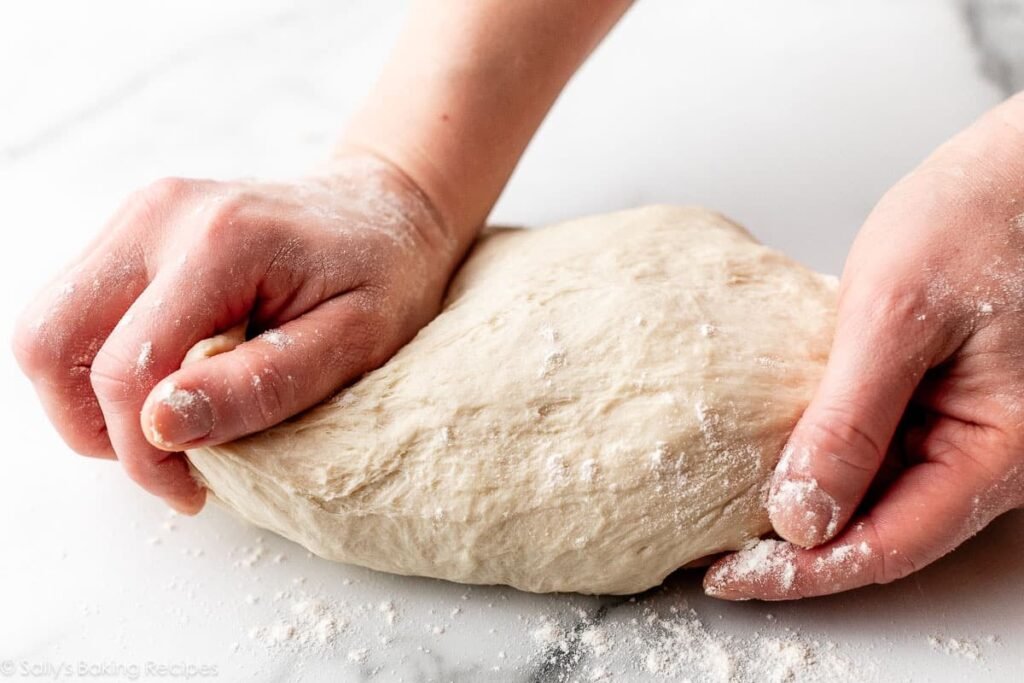
This is where my whole wheat bread recipe improved the most. Whole wheat flour absorbs water slowly. I knead the dough for about 10 minutes, resting it briefly if it feels tight. The goal is a soft, slightly sticky dough—not dry.
First Rise
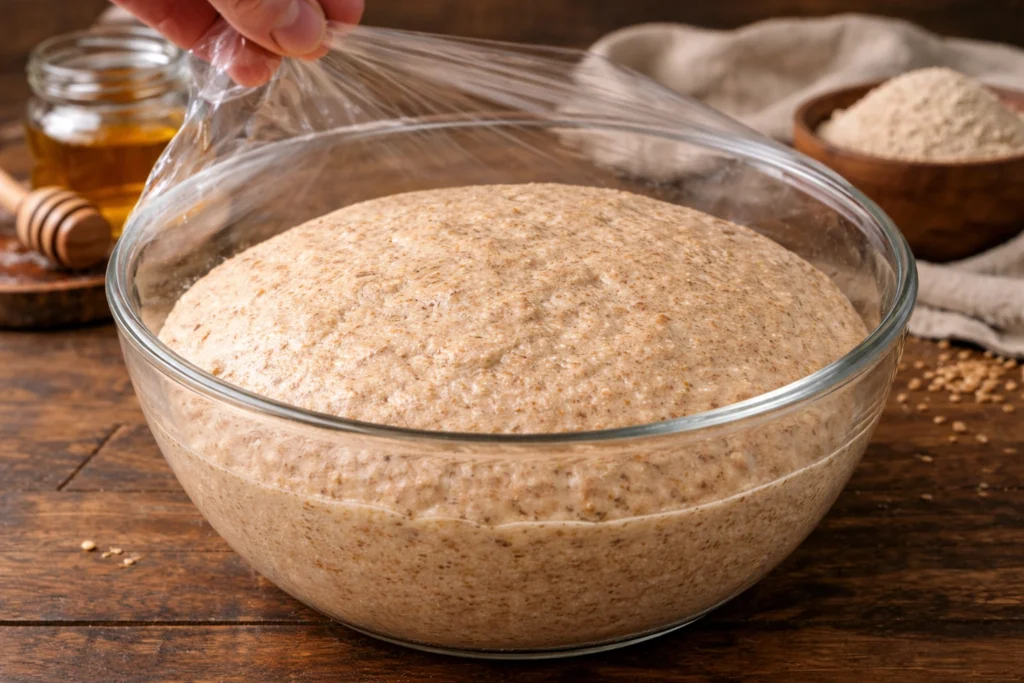
I place the dough in an oiled bowl, cover it, and let it rise until doubled. In warmer kitchens, this takes about an hour. I don’t rush this step anymore.
Shaping and Second Rise
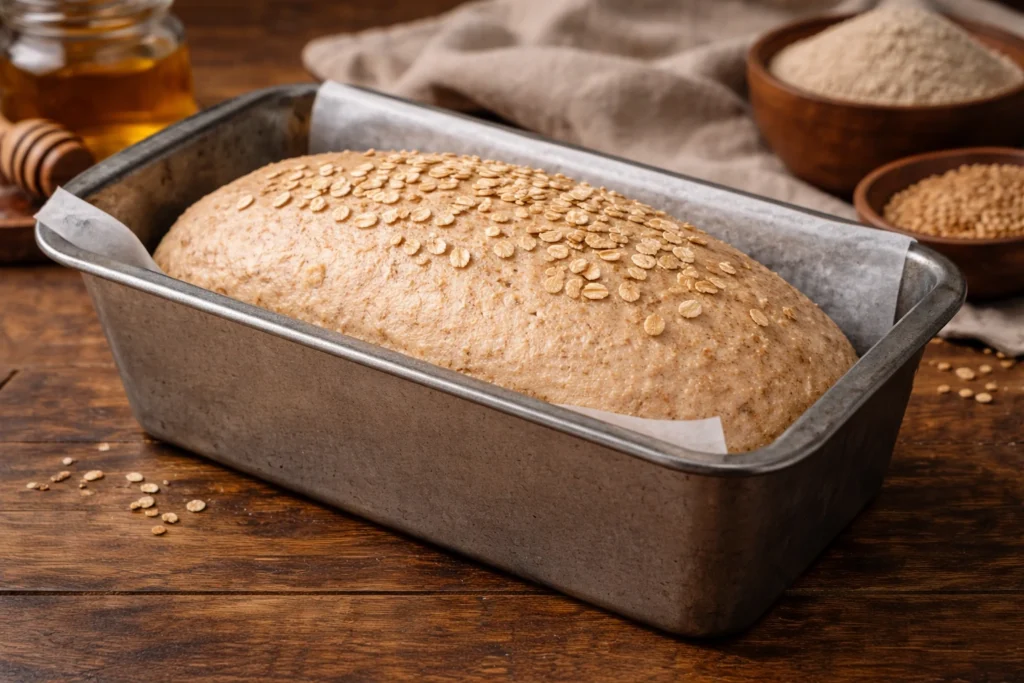
After gently deflating the dough, I shape it into a loaf and place it in a greased tin. The second rise usually takes 30–40 minutes. I bake only when the dough slowly springs back when touched.
Baking
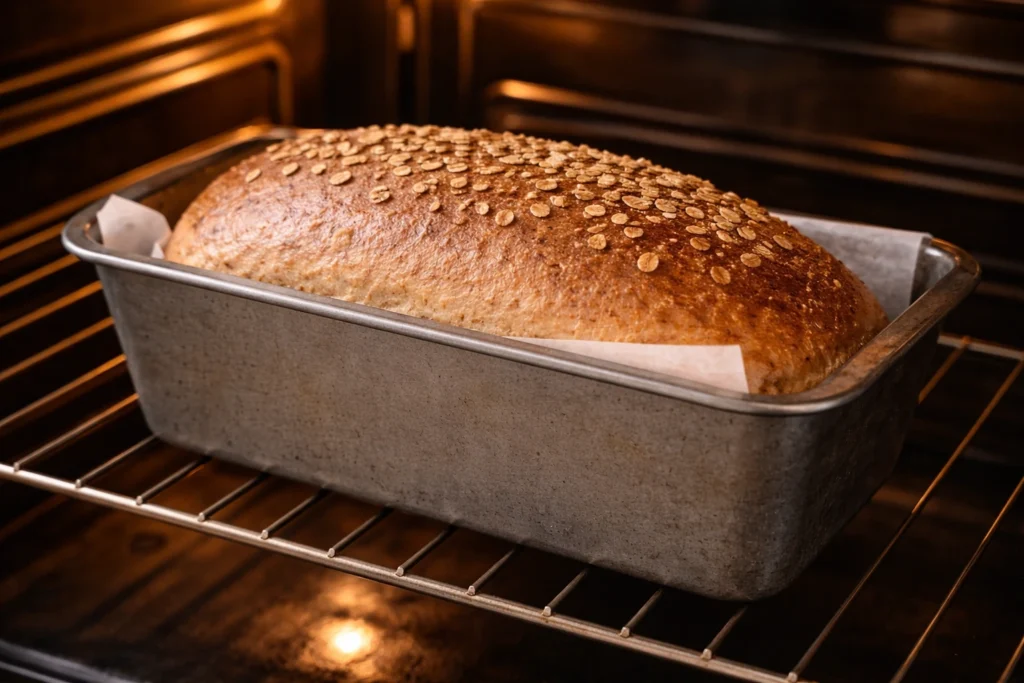
The loaf bakes at 180°C (350°F) for about 35–40 minutes. I know it’s done when the crust feels firm and the bottom sounds hollow when tapped.
Common Mistakes I Made With Whole Wheat Bread
- Adding too much flour while kneading
- Under-proofing the dough
- Expecting white-bread softness
- Skipping resting time
Whole wheat bread rewards patience. The dough tells you what it needs if you give it time.
Tips and Variations I Use
Sometimes I replace a quarter cup of water with milk for a softer crumb. On busy weeks, I add soaked seeds for texture. For healthier variations, I often refer back to ideas from my Healthy Foods section.
If you’re interested in naturally fermented versions, this whole wheat sourdough bread recipe explains fermentation in detail.
How I Store and Use This Bread
I store the cooled loaf wrapped in cloth for two days or refrigerate slices beyond that. It toasts beautifully and works well for breakfast sandwiches.
For sweet baking inspiration using whole wheat flour, I’ve learned a lot from this whole wheat banana bread recipe.
Final Thoughts
This whole wheat bread recipe didn’t come together overnight for me. It’s the result of slowing down, making mistakes, and learning how flour behaves in a real home kitchen. If your first loaf isn’t perfect, that’s part of the process.
Frequently Asked Questions
Is this whole wheat bread recipe good for beginners?
Yes. It’s written for home kitchens and focuses on understanding dough rather than precision baking.
Why is my whole wheat bread dense?
This usually happens due to low hydration or insufficient rising time.
Can I knead this dough by hand?
I always knead by hand. It helps me understand the dough texture better.
Can I reduce yeast in this recipe?
You can, but the rise time will increase.
Does whole wheat bread need more water?
Yes. Whole wheat flour absorbs more liquid than refined flour.
Can I freeze this bread?
Yes. I freeze it sliced and toast directly when needed.