Shukto recipe was never something I learned quickly, even though I grew up eating it. I used to avoid cooking it because the balance of bitter, sweet, and mild spices felt intimidating. Only after a few failed attempts did I understand that shukto isn’t about perfection, it’s about patience and restraint.
I realised this dish teaches you to slow down in the kitchen. You can’t rush the frying, you can’t overpower the bitterness, and you definitely can’t skip steps. Once I accepted that, shukto started making sense to me.
What Is Shukto and Why It Matters
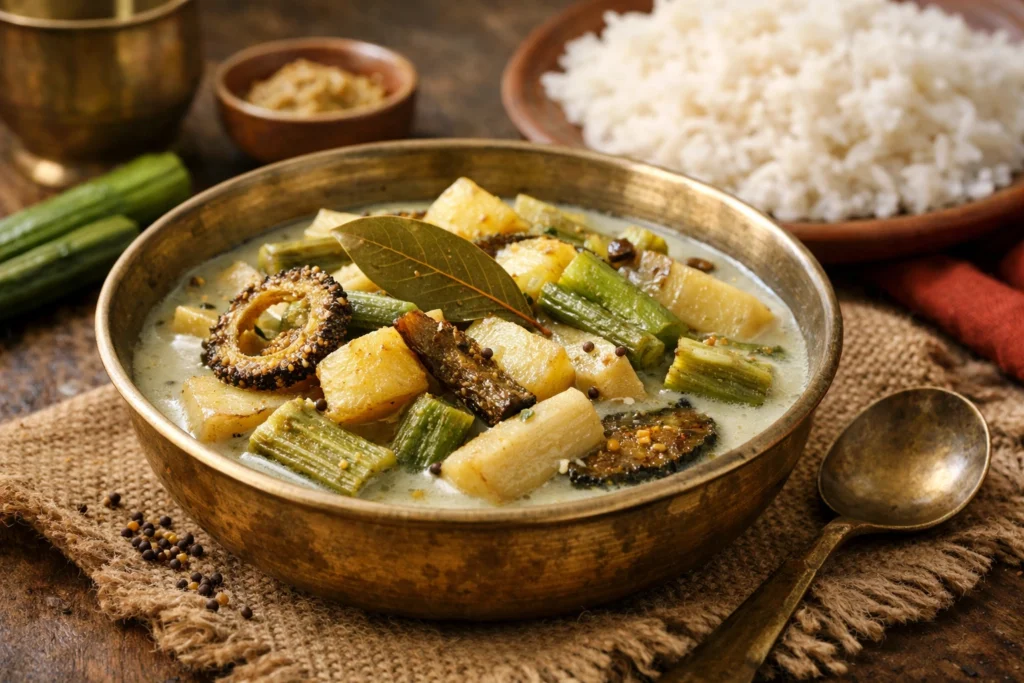
Shukto is a traditional Bengali mixed vegetable dish known for its gentle bitterness and light gravy. It is usually served at the beginning of a meal with plain rice. Unlike richer Bengali curries, shukto is intentionally subtle.
The bitterness typically comes from karela (bitter gourd), which is balanced with vegetables like raw banana, drumstick, and potato. Mustard paste, ginger, and a splash of milk bring everything together without making the dish heavy.
When I first started learning Bengali cooking seriously, understanding shukto helped me grasp the basics of flavor control. It also connects closely with everyday beginner cooking basics like frying, tempering, and layering ingredients.
Ingredients for Traditional Shukto Recipe
I stick to easily available vegetables while keeping the spirit of the dish intact.
- Bitter gourd (karela), thinly sliced
- Potatoes, medium cubes
- Raw banana, sliced
- Drumsticks, cut into pieces
- Ridge gourd or pumpkin (optional)
- Mustard seeds
- Ginger paste
- Milk
- Bay leaf
- Whole panch phoron
- Salt
- Sugar (very little)
- Mustard oil
If you’re interested in how bitter vegetables still fit into healthy foods, shukto is a good place to start.
Preparing the Vegetables Properly
This step used to feel tedious to me, but it makes a noticeable difference.
I sprinkle salt over the sliced karela and let it sit for about 15 minutes. Then I gently squeeze and rinse it. This reduces harsh bitterness without removing it completely. The other vegetables are washed, peeled if needed, and cut uniformly so they cook evenly.
Step-by-Step Shukto Recipe
Frying the Vegetables
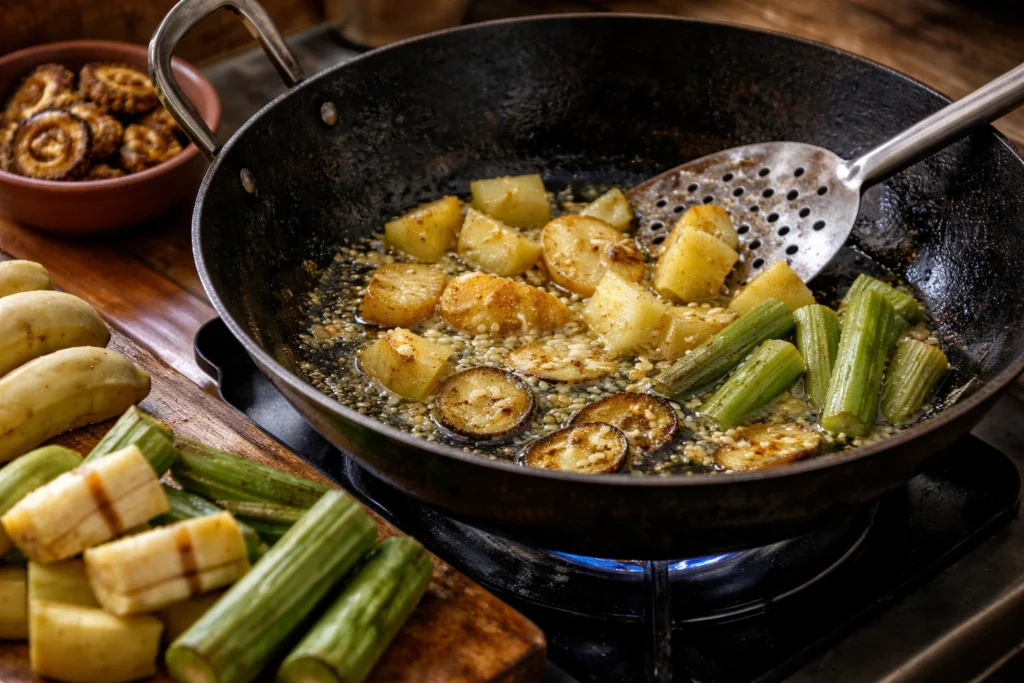
I heat mustard oil in a deep pan and fry the karela slices first until lightly browned. I remove them and keep aside. Then I fry the potatoes, raw banana, drumsticks, and any other vegetables separately. This step builds the base flavor and prevents vegetables from turning mushy later.
Making the Mustard Paste
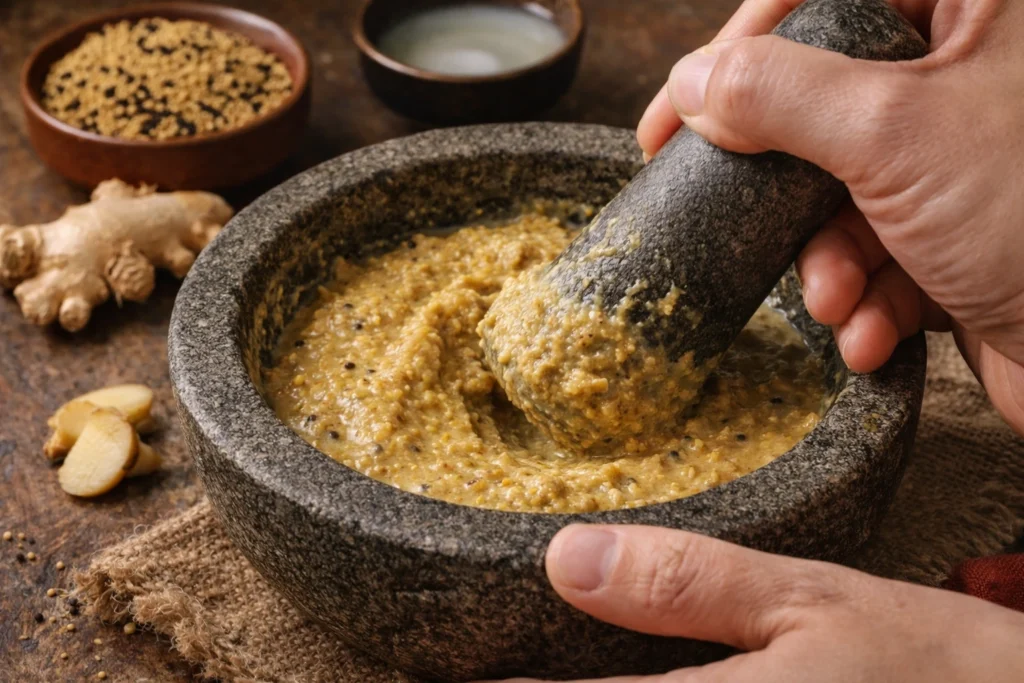
I soak mustard seeds in warm water and grind them with ginger into a smooth paste. I avoid adding too much water because the paste should be thick, not runny.
Building the Base
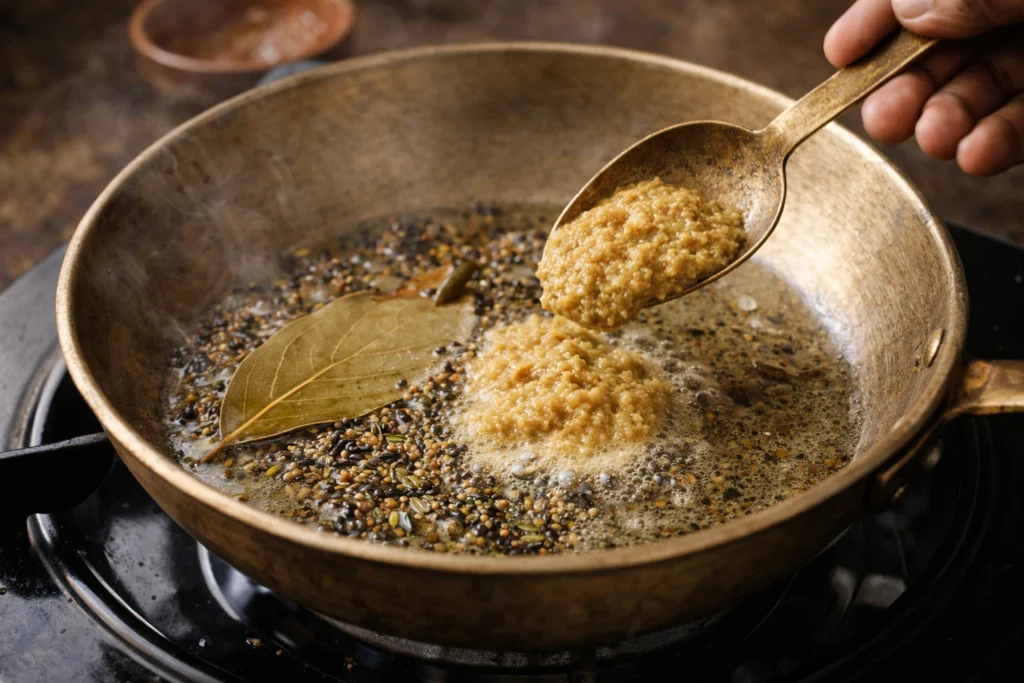
In the same pan, I add a little more oil if needed, then temper with bay leaf and panch phoron. Once aromatic, I add the mustard-ginger paste on very low heat. This step requires patience, high heat can make the mustard bitter in an unpleasant way.
Combining Everything
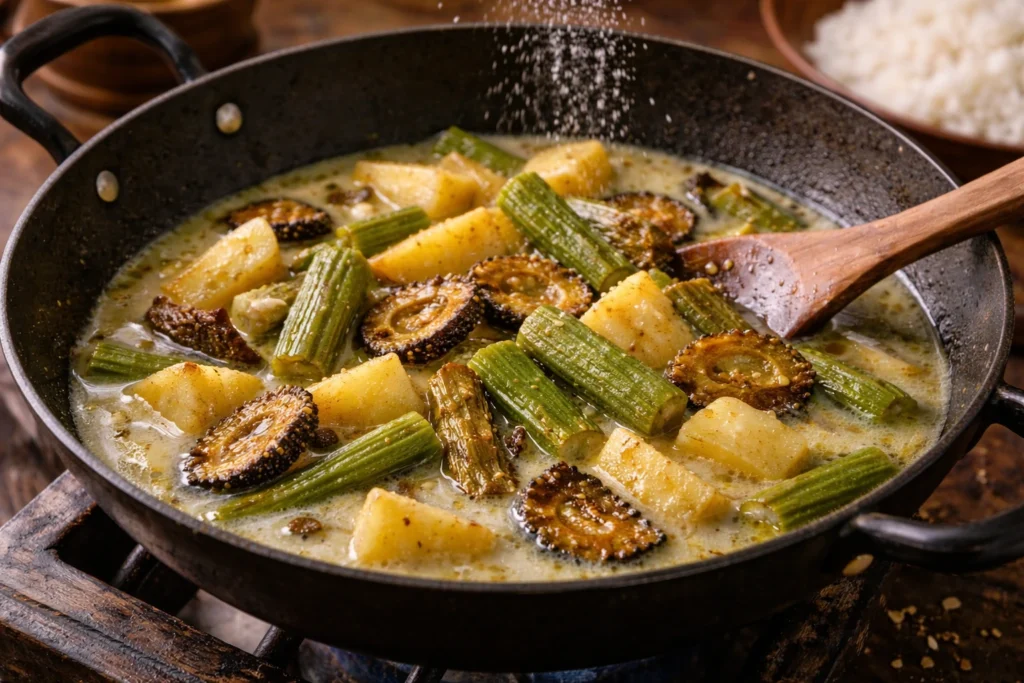
I return all the fried vegetables to the pan and gently mix them with the paste. Salt is added at this stage, along with enough water to barely cover the vegetables.
Finishing Touches
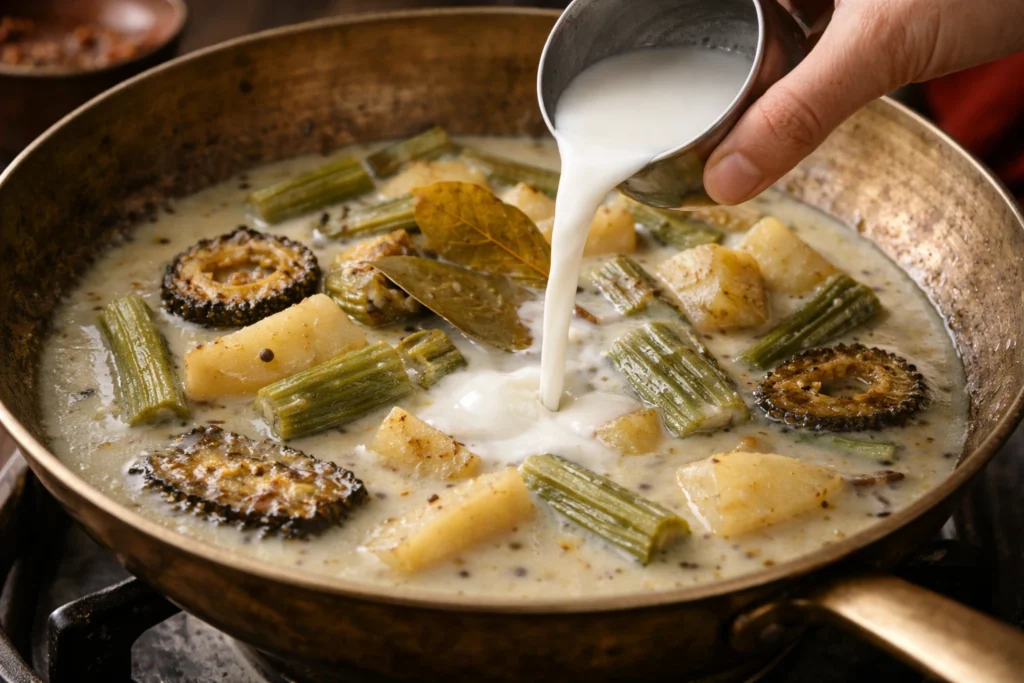
Once the vegetables are cooked through, I lower the heat and stir in milk. A pinch of sugar goes in at the very end. The gravy should remain thin and pale, not thick or spicy.
Common Mistakes I Made While Cooking Shukto
- Using too much mustard paste, which overpowers the dish
- Skipping vegetable frying to save time
- Adding milk too early, causing it to split
- Trying to make it spicy with extra chilies
Once I stopped treating shukto like a regular curry, these mistakes naturally reduced.
Tips and Variations I Use at Home
Sometimes I add a small piece of bori (sun-dried lentil dumpling) for texture. On lighter days, I reduce the number of vegetables and keep the gravy even thinner.
If karela feels too strong, you can reduce the quantity but I don’t recommend skipping it entirely. The dish loses its identity without bitterness.
How I Serve Shukto
I always serve shukto with plain steamed rice. No ghee, no sides, no extras. It works best when it’s the first dish of the meal, setting a calm tone for everything that follows.
Nutritionally, bitter vegetables and mustard have been studied for their digestive role, which is discussed in simple terms on Healthline and traditional cooking techniques are often explained thoughtfully on Serious Eats.
Final Thoughts on Shukto Recipe
This shukto recipe taught me that cooking doesn’t always need bold flavors to feel complete. Some dishes ask for quiet attention and acceptance of subtlety. Shukto is one of them.
Every time I cook it now, I feel more grounded in my kitchen and more respectful of traditional methods that don’t try to impress, but simply nourish.
FAQs
Is shukto always bitter?
Yes, mild bitterness is essential, but it should never be sharp or overpowering.
Can I make shukto without milk?
You can, but milk softens the flavors. Without it, the dish tastes flatter.
Which oil is best for shukto recipe?
Mustard oil gives the most authentic flavor and aroma.
Can shukto be reheated?
It can be gently reheated, but fresh shukto always tastes better.
Is shukto suitable for beginners?
Yes, as long as you cook slowly and keep the seasoning minimal.