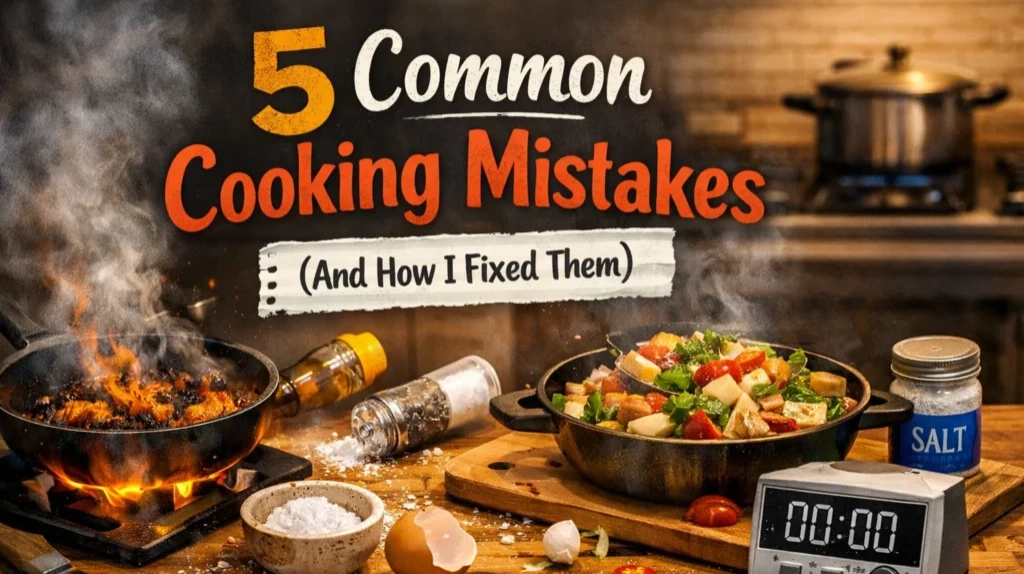
After I finished my graduation and started cooking regularly, I used to think good cooking was all about recipes. Over time, I realised it was actually about avoiding a few basic mistakes. Once I fixed those, cooking became easier, faster, and far less stressful.
In this post, I’m sharing five very common cooking mistakes beginners make, mistakes I made myself and how I slowly learned to fix them through everyday experience.
1. Adding Too Much Oil or Too Little Oil
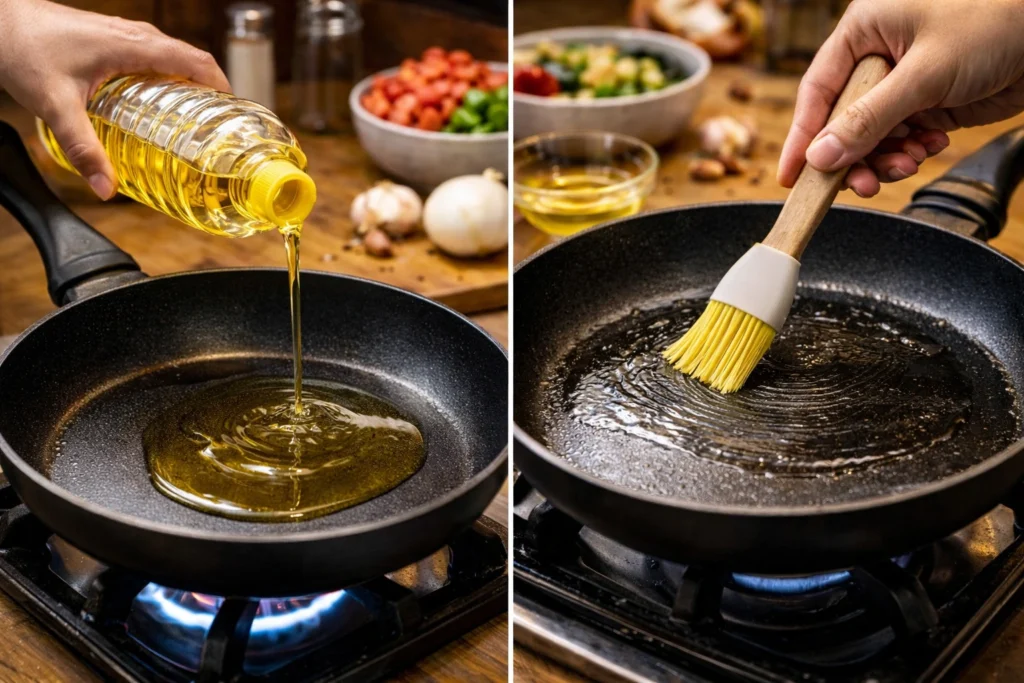
One of my biggest beginner mistakes was oil management. Some days I added too much oil thinking it would improve taste, and other days I added too little, which caused food to stick or burn.
Over time, I learned that most everyday Indian cooking doesn’t need excess oil. It just needs the right amount at the right time.
How I fixed it:
- I started measuring oil instead of pouring freely
- I understood when oil is needed for cooking vs just greasing
- I paid attention to how food behaves on the pan
2. Cooking on High Flame All the Time
As a beginner, I thought cooking faster means cooking on high flame. This resulted in food burning outside and staying undercooked inside.
This mistake caused more frustration than anything else.
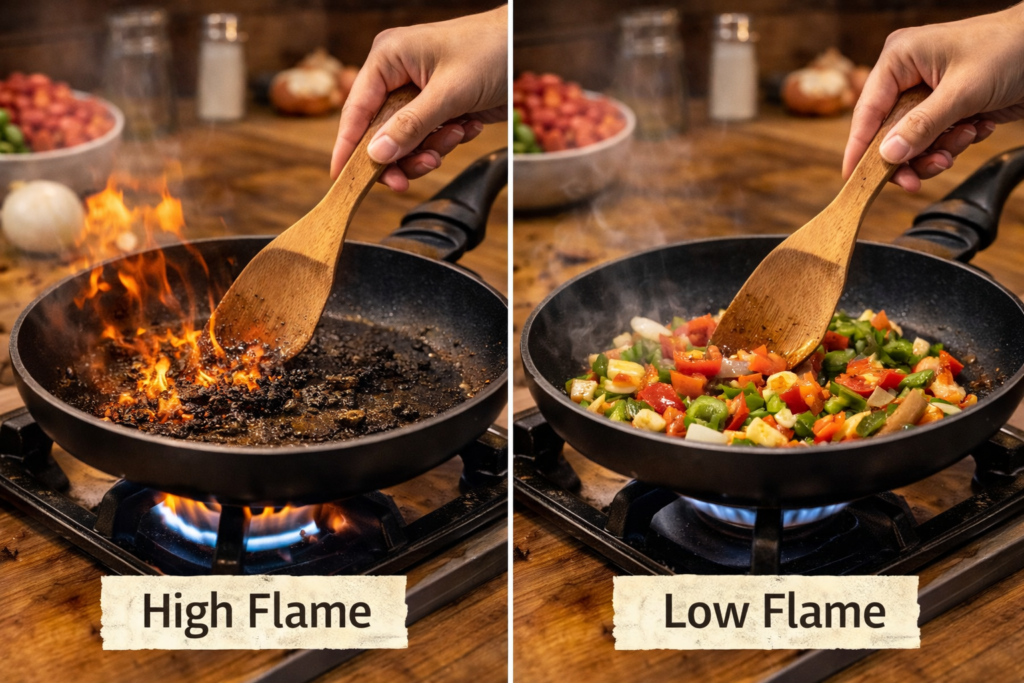
How I fixed it:
- I switched to medium flame for most everyday cooking
- I learned that slow and steady cooking improves taste
- I stopped rushing the process
3. Not Tasting Food While Cooking
Earlier, I used to add salt and spices based on assumptions. The final result often felt off, even though the recipe looked right.
Tasting food while cooking felt strange at first, but it turned out to be one of the most important habits I developed.
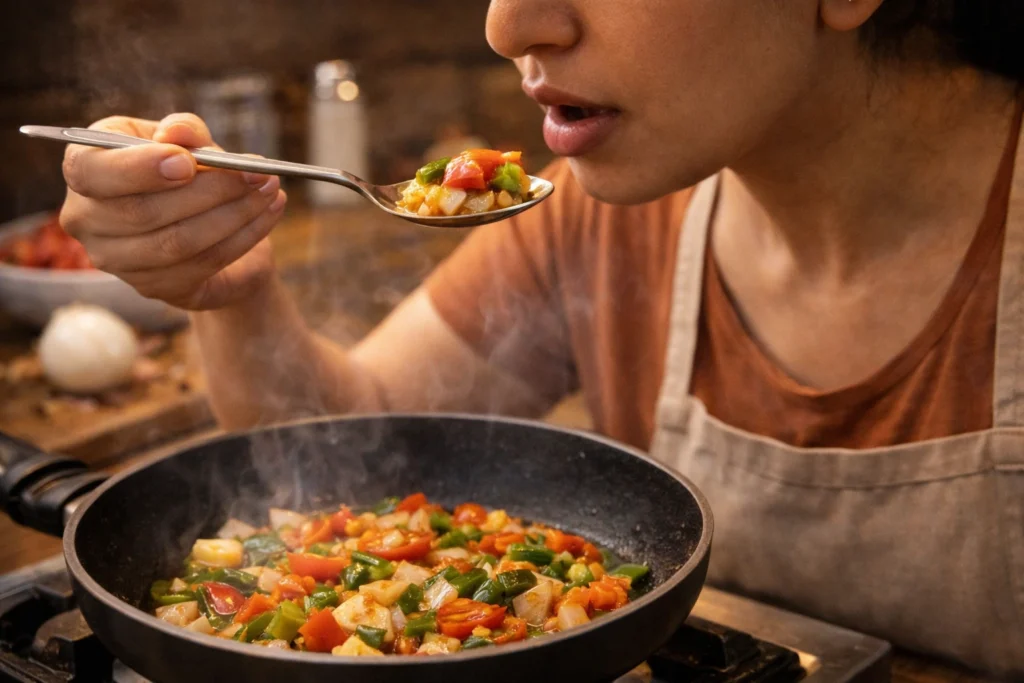
How I fixed it:
- I started tasting food at different stages
- I adjusted salt and spice gradually
- I stopped relying only on measurements
International cooking sites such as BBC Good Food also emphasise mastering basic techniques before moving on to complex recipes.
4. Overcrowding the Pan
I used to put everything into the pan at once to save time. This often led to vegetables releasing water, turning dishes soggy instead of cooked properly.
This was especially common when I was tired after work and wanted to finish cooking quickly.
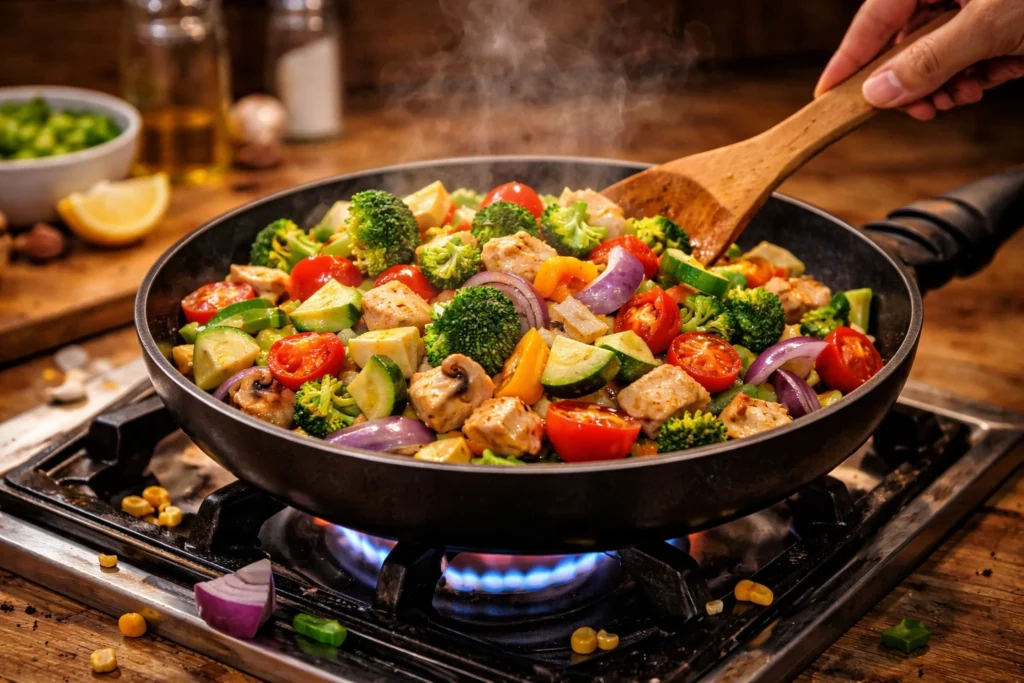
How I fixed it:
- I cooked in batches when needed
- I used wider pans for vegetables
- I gave ingredients enough space to cook evenly
Simple recipes helped me practice without pressure. For example, meals like this healthy vegetable uttappam worked well on busy days.
5. Expecting Perfect Results as a Beginner
This was the biggest mistake of all. I expected every meal to turn out perfect. When it didn’t, I felt discouraged and thought I wasn’t good at cooking.
What I didn’t realise then was that mistakes are part of learning.
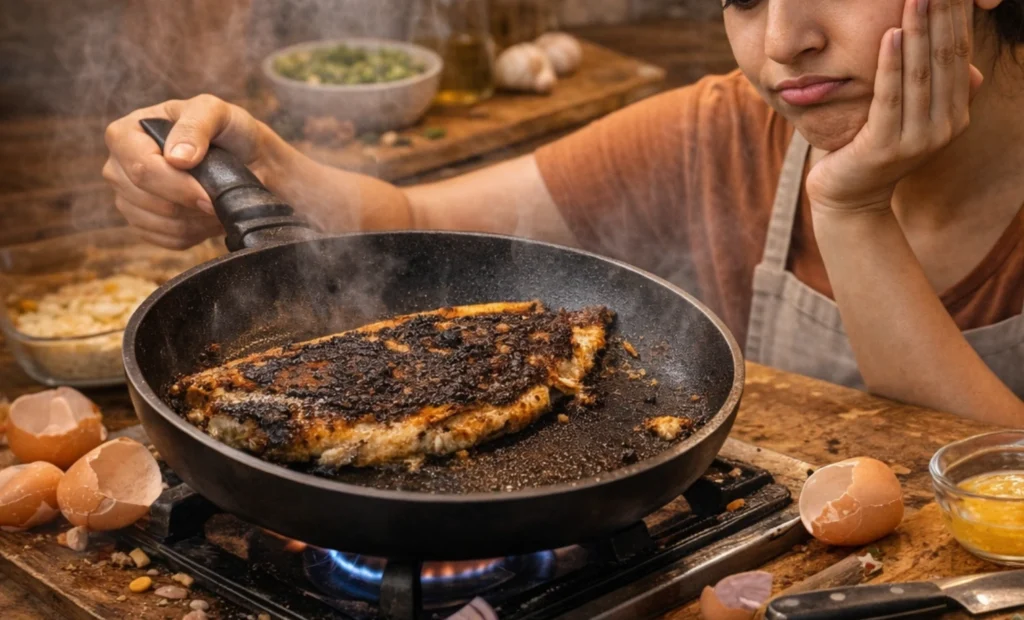
How I fixed it:
- I stopped aiming for perfection
- I focused on improvement, not comparison
- I treated every meal as practice
What Helped Me Improve as a Beginner
Once I fixed these basic mistakes, cooking became less intimidating. Simple meals started turning out better, and I felt more confident in the kitchen.
- Keeping recipes simple
- Using basic ingredients
- Cooking regularly, even on tired days
Choosing simple, reliable ingredients also made a difference. Foods like rolled oats helped me focus on consistency rather than complexity.
Final Thoughts
If you’re new to cooking, making mistakes doesn’t mean you’re bad at it. It means you’re learning.
Fixing small habits made a big difference for me, and these same changes can make everyday cooking easier for any beginner.
This post is part of my Beginner Cooking Basics section, where I share simple, practical lessons I’ve learned from everyday cooking.
Frequently Asked Questions
Is it normal to make mistakes while learning cooking?
Yes, mistakes are completely normal and part of the learning process.
How long does it take to become confident in cooking?
Confidence builds gradually with regular practice and simple meals.
Should beginners follow recipes exactly?
Recipes are helpful, but tasting and adjusting food is equally important.
Is cooking on high flame always bad?
High flame is useful for some steps, but most everyday cooking works better on medium flame.
What is the best way to improve cooking skills?
Cooking regularly and learning from small mistakes helps improve skills over time.
Is this post suitable for absolute beginners?
Yes, this post is written specifically for beginners and first-time cooks.